You Don’t Have to Be Fearless to Use Your Voice
You don’t have to be fearless to use your voice. Discover how courage, confidence, healing, faith, and small brave steps can help you speak up and embrace your voice.
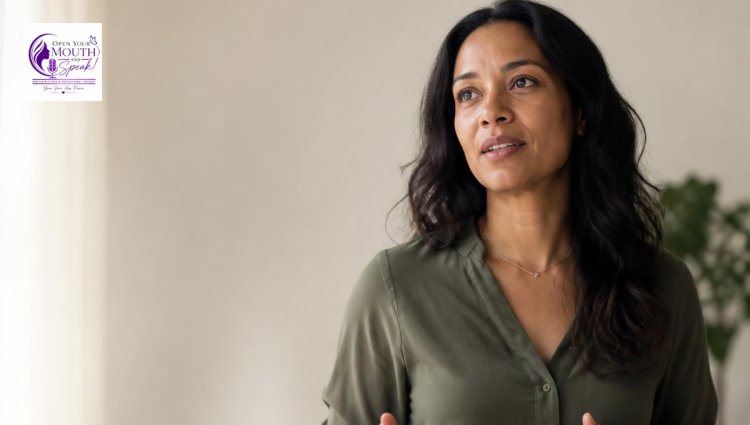
Courage doesn’t mean the fear disappears—it means you speak anyway.
Have you ever had something important to say, but stopped yourself because you were afraid of how people might react?
Maybe you wanted to share your opinion in a meeting. Maybe you needed to set a boundary with someone you love. Or perhaps there is a story inside you that you have wanted to tell for years, but fear keeps whispering, “What will they think?”
If that sounds familiar, you are not alone.
Many women have learned to make themselves smaller, quieter, and more agreeable just to avoid conflict or judgment. Over time, staying silent can start to feel safer than speaking up.
But here is something worth remembering: you do not have to be fearless to use your voice.
At Open Your Mouth and Speak, we believe that finding your voice is not about becoming the loudest person in the room. It is about becoming comfortable enough with who you are to say what needs to be said.
Fear Does Not Mean You Are Weak
One of the biggest misconceptions about confidence is that confident people never feel afraid.
They do.
The difference is that confidence does not require the absence of fear. It means learning how to move forward while fear is still there.
Your heart might race before you speak. You might question your words. You might worry that someone will disagree with you.
That does not mean you should stay silent.
Sometimes courage looks very ordinary. It can sound like saying, “I need help.” It can look like asking for what you deserve. It can mean telling someone, “That hurt me,” or finally sharing an idea you have been keeping to yourself.
These moments may seem small, but they can become powerful turning points.
Why So Many Women Hold Back
There are many reasons women struggle to use their voices.
Some have been criticized when they spoke up. Others grew up being told they were too emotional, too sensitive, too outspoken, or too difficult. Some women have experienced relationships where expressing their thoughts was discouraged or punished.
And sometimes, the silence simply comes from self-doubt.
You may wonder:
- Am I saying the right thing?
- What if they laugh at me?
- What if they disagree?
- What if I make a mistake?
- What if speaking up changes my relationships?
These questions are understandable. But constantly waiting until you feel completely ready can keep you waiting forever.
You don't need perfect words.
You need an honest voice.
Confidence Begins With Small Conversations
You do not have to stand on a stage tomorrow and deliver a powerful speech.
Confidence building often starts much closer to home.
Start with one conversation.
Tell a friend what you really think instead of automatically agreeing. Ask a question when you do not understand something. Practice saying “no” without writing a five-minute explanation afterward.
If speaking in front of others makes you nervous, begin with smaller opportunities. Share an idea during a conversation. Participate in a group discussion. Read something aloud. Practice introducing yourself confidently.
Every time you use your voice, you teach yourself something important:
My words matter.
That belief can grow slowly, and that is okay.
Your Voice Is Connected to Your Healing
For some women, finding their voice is more than a communication skill. It can be part of their emotional healing.
When you have spent years hiding your feelings, avoiding difficult conversations, or believing that your experiences do not matter, speaking honestly can feel uncomfortable at first.
But expressing yourself can also create space for growth.
You might finally acknowledge what you need. You might recognize a pattern that has been hurting you. You might begin setting healthier boundaries. You might discover that the story you once felt ashamed of can become part of someone else's hope.
Healing does not happen overnight, and speaking up does not erase difficult experiences.
But your voice can become one of the tools you use to move forward.
You Are Allowed to Take Up Space
There is a difference between being disrespectful and being honest.
Using your voice does not mean talking over people. It does not mean forcing everyone to agree with you. It does not mean having an answer for everything.
It means allowing yourself to exist fully.
You are allowed to have an opinion.
You are allowed to ask questions.
You are allowed to change your mind.
You are allowed to say no.
You are allowed to ask for support.
And you are allowed to speak about the things that matter to you.
This is an important part of women's empowerment. True empowerment is not about pretending to have everything figured out. It is about recognizing your value and trusting yourself enough to participate in your own life.
Faith Can Give You Strength When Confidence Feels Small
For women who draw strength from faith, courage can also come from remembering that their identity is not determined by other people's opinions.
There will always be someone who does not understand your journey. There may be people who disagree with your choices. You may even experience moments when your own confidence disappears.
That is where faith-based empowerment can provide a different kind of foundation.
Faith can remind you that your worth is not dependent on applause, approval, or perfection.
You can be nervous and still move forward.
You can be uncertain and still take the next step.
You can be healing and still have something valuable to say.
You Do Not Have to Find Your Voice Alone
Sometimes, the hardest part of using your voice is believing that someone will listen.
That is why having the right support system matters.
A trusted friend, mentor, coach, community, or support group can help you see possibilities that are difficult to see on your own. Mentorship & life coaching can provide encouragement, accountability, and a safe space to explore goals, challenges, and personal growth.
At Open Your Mouth and Speak, the goal is to help women and girls heal, grow, and reconnect with their strength and purpose through mentorship, faith-based guidance, and community support.
Sometimes you do not need someone to speak for you.
You simply need someone who reminds you that you can speak for yourself.
Start With One Brave Sentence
If you have been waiting to become fearless before using your voice, give yourself permission to stop waiting.
You can begin today.
Say the thing you have been avoiding.
Ask the question you have been afraid to ask.
Tell someone what you need.
Share the idea.
Set the boundary.
Tell your story when you are ready.
Your voice does not have to be perfect to be powerful.
And you do not have to become a completely different person to become more confident.
You just have to take the next honest step.
Because courage is not the absence of fear.
Courage is deciding that what you have to say matters, even when your voice shakes.
Frequently Asked Questions
1. How can I become more confident when speaking?
Start small. Practice expressing your thoughts in everyday conversations, ask questions, share your opinions, and gradually place yourself in situations where you can practice speaking. Confidence building happens through repeated experience, not overnight.
2. What should I do if I am afraid of being judged?
Remember that you cannot control everyone's opinion. Focus instead on whether your words are honest, respectful, and meaningful to you. The goal is not to make everyone agree with you; it is to become comfortable expressing yourself.
3. Can finding my voice help with emotional healing?
For some people, yes. Expressing thoughts and feelings can help create awareness, establish boundaries, and reduce the burden of keeping everything inside. If you are dealing with trauma or serious emotional distress, professional support can also be an important part of healing.
4. How does mentorship help women find their voice?
A supportive mentor can provide encouragement, perspective, accountability, and a safe place to work through self-doubt. Mentorship & life coaching can also help women identify goals and develop greater confidence in their personal and professional lives.
5. Do I have to be fearless before I speak up?
Absolutely not. Fear is a normal human response. You can feel nervous and still speak. In fact, some of the most meaningful moments of women's empowerment begin when someone decides to use her voice despite being afraid.
Your Voice Matters
You do not need a perfect story, perfect confidence, or perfect words.
You simply need the courage to begin.
At Open Your Mouth and Speak, we believe every woman deserves the opportunity to heal, grow, and find her voice. Your experiences matter. Your perspective matters. And your voice matters.
So take a breath.
Start with one sentence.
And speak.
https://openyourmouthandspeak.com/
843-263-2202
What's Your Reaction?