How to Leave an Abusive Relationship Safely: A Step-by-Step Guide
Learn how to leave an abusive relationship safely with practical steps for safety planning, support, finances, digital privacy, finding a safe place, and healing after abuse.
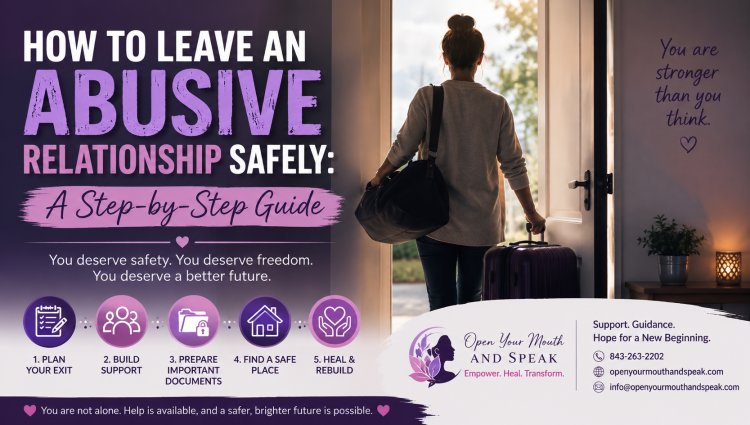
Leaving an abusive relationship is not always as simple as walking away. When someone is experiencing domestic violence, emotional abuse, threats, financial control, or intimidation, leaving may require careful planning, support, and patience.
If you are thinking about how to leave an abusive relationship safely, remember this first: the abuse is not your fault, and you deserve to live without fear.
You do not have to figure everything out in one day. A safety plan can help you prepare for leaving while considering your personal circumstances, children, finances, housing, transportation, and support system.
At Open Your Mouth and Speak, we believe that every woman deserves to be heard, supported, and empowered to move toward healing and hope. Our work includes empowerment and healing workshops, mentorship, life coaching, community outreach, and resource navigation for women and girls.
What Is an Abusive Relationship?
An abusive relationship is one in which a person uses behaviors to control, frighten, manipulate, threaten, or harm another person.
Abuse can take many forms, including:
- Physical abuse
- Emotional or psychological abuse
- Sexual abuse
- Financial abuse
- Verbal threats and intimidation
- Controlling who you see or where you go
- Monitoring your phone, messages, or location
- Threatening you, your children, pets, family, or friends
Abuse does not always leave physical injuries. Emotional abuse and coercive control can also have a serious impact on a person's confidence, independence, and sense of safety.
How to Leave an Abusive Relationship Safely
1. Trust What You Are Experiencing
One of the hardest steps can be recognizing that the behavior is abuse.
If you constantly feel afraid of your partner's reaction, are being controlled, threatened, isolated, humiliated, or physically harmed, consider talking with someone you trust or a domestic violence advocate.
You do not need to convince everyone that your experience is real. Your safety and wellbeing matter.
2. Create a Personal Safety Plan
A domestic violence safety plan is a practical plan for what you can do before, during, and after leaving.
Think about:
- Where you could go if you needed to leave quickly
- Who you could call for help
- How you could safely get transportation
- Where important documents could be stored
- What you would take with you
- How you could protect your children
- What you would do if your partner discovered your plans
If possible, speak with a qualified domestic violence advocate who can help you create a plan based on your situation.
3. Tell Someone You Trust
Abuse often creates isolation. Reconnecting with a trusted friend, relative, coworker, advocate, counselor, faith leader, or community organization can help you feel less alone.
You don't have to tell everyone everything.
Start with one safe person.
You might simply say:
"I'm not feeling safe at home, and I may need help."
Having someone who knows what is happening can make it easier to get assistance if an emergency occurs.
4. Prepare Important Documents and Essentials
If it is safe to do so, consider gathering important items before you leave.
These may include:
- Identification
- Birth certificates
- Passports
- Medication
- Insurance information
- Financial documents
- Bank information
- Children's documents
- Important phone numbers
- Keys
- Essential clothing
- Important legal or custody documents
Keep copies somewhere secure if taking the originals could put you at greater risk.
You may also consider preparing an emergency bag and keeping it with someone you trust.
5. Think About Financial Safety
Financial control is a common form of abuse. If your partner controls your money, planning for financial independence can be an important part of leaving.
If it is safe and practical, learn about your financial options, gather relevant documents, and speak with a trusted advocate about available community resources.
Do not take financial steps that could put you in immediate danger. Your safety comes first.
6. Protect Your Digital Privacy
Technology can sometimes be used to monitor or control survivors.
If you believe your phone, computer, email, or accounts may be monitored, consider speaking with a domestic violence advocate about technology safety.
Depending on your circumstances, you may need to review:
- Location sharing
- Passwords
- Shared accounts
- Social media privacy
- Email access
- Device permissions
Be careful when changing passwords or settings if doing so could alert an abusive partner.
If you believe your devices are being monitored, use a safer device when seeking help if possible.
7. Plan Where You Will Go
Before leaving, think about a safe destination.
This could be:
- A trusted friend or family member
- A domestic violence shelter
- A community organization
- Temporary housing
- Another safe location recommended by an advocate
Avoid sharing your location publicly, especially if you believe your partner may try to find you.
Your plan does not have to be perfect. It simply needs to make you safer.
8. Choose the Safest Time to Leave
There is no universal "right time" to leave an abusive relationship.
For some people, leaving when the abusive partner is away may be safer. For others, additional support or emergency assistance may be necessary.
If you believe your partner could become violent when they discover you are leaving, do not confront them alone simply to announce your decision.
A domestic violence advocate can help you think through your specific circumstances.
What to Do After Leaving an Abusive Relationship
Leaving is an important step, but healing may take time.
You may experience fear, sadness, anger, confusion, guilt, relief, or even doubt. These feelings do not mean you made the wrong decision.
Rebuild Your Support System
Stay connected with people who respect your boundaries and encourage your wellbeing.
Support groups, trusted friends, family members, professional counselors, faith communities, advocates, and other community resources may provide valuable support.
Rebuild Your Confidence
Abuse can damage your sense of self-worth.
Start with small steps.
Celebrate decisions you make for yourself. Set healthy boundaries. Rediscover interests you may have lost. Give yourself permission to imagine a future that is not controlled by someone else's behavior.
Healing is a process, not a race.
Give Yourself Grace
You may have questions about why you stayed, why you returned, or why you did not leave sooner.
Try replacing self-blame with compassion.
People remain in abusive relationships for many complicated reasons, including fear, financial dependence, children, isolation, threats, emotional attachment, and lack of safe alternatives.
When You Need Immediate Help
If you or your children are in immediate danger, contact your local emergency services or go to a safe location if you can do so safely.
You can also contact a qualified domestic violence organization or local advocate for confidential safety planning and support.
If searching for help online could be unsafe, consider using a safer device and clearing browsing history only if doing so will not increase your risk.
How Open Your Mouth and Speak Supports Women
At Open Your Mouth and Speak, we believe that healing can begin when women are given space to be heard, supported, and empowered.
Founded by Monica DeJesus, a faith-based speaker, author, and life coach, Open Your Mouth and Speak provides services focused on empowerment, healing, mentorship, life coaching, community outreach, and resource navigation.
For women recovering from difficult experiences, having access to compassionate guidance and appropriate resources can be an important part of moving from pain toward purpose.
Our goal is to help women and girls rediscover their strength, voice, hope, and sense of purpose.
Final Thoughts
Knowing how to leave an abusive relationship safely is about more than simply walking out the door. It may involve creating a safety plan, finding trusted support, protecting your finances and information, preparing essential documents, and identifying a safe place to go.
You do not have to do everything at once.
If you are experiencing abuse, remember: you are not alone, the abuse is not your fault, and you deserve safety, dignity, and respect.
Your story matters. Your voice matters. And there can be life, healing, and hope beyond abuse.
Frequently Asked Questions
1. What is the safest way to leave an abusive relationship?
The safest approach depends on your circumstances. Creating a personalized safety plan with a domestic violence advocate can help you consider transportation, housing, children, finances, communication, and immediate safety before leaving.
2. What should I take when leaving an abusive relationship?
If it is safe, consider taking identification, important documents, medications, keys, money or financial information, children's documents, essential clothing, and important contact information. If gathering these items could put you in danger, prioritize your immediate safety.
3. How can I leave an abusive relationship if I have no money?
You may be able to access domestic violence shelters, community organizations, advocacy services, emergency assistance, or other local resources. A domestic violence advocate can help you identify options based on your situation.
4. What if my abusive partner monitors my phone?
Be cautious about making changes that could alert the person monitoring you. If possible, use a safer device to seek help and speak with a domestic violence advocate about technology safety.
5. Can I heal after an abusive relationship?
Yes. Healing takes time and can look different for everyone. Support from trusted people, qualified professionals, advocacy organizations, supportive communities, and healthy relationships can help survivors rebuild confidence and move forward.
About Open Your Mouth and Speak
Open Your Mouth and Speak
Founded by Monica DeJesus
Services: Empowerment & Healing Workshops | Mentorship & Life Coaching | Community Outreach & Engagement | Resource Navigation & Referrals
Phone: 843-263-2202
Open Your Mouth and Speak is a faith-based organization dedicated to empowering women and girls through healing, mentorship, faith, community support, and personal growth.
Website: https://openyourmouthandspeak.com/
If you or someone you know is in immediate danger, contact your local emergency services. For domestic violence support, consider reaching out to a qualified local domestic violence organization or advocate for confidential safety planning.
What's Your Reaction?